
Introduction
Manufacturers often compare automatic riveting machines and assembly machines when they plan to improve production efficiency and reduce manual operations. These automation systems help factories increase output, improve accuracy, and maintain consistent product quality. However, each machine focuses on different production tasks and solves different manufacturing challenges.
Moreover, understanding the differences between these machines helps manufacturers select suitable equipment for their specific applications. Automatic riveting machines focus on fastening processes, while assembly machines handle complete product assembly procedures.
What Are Automatic Riveting Machines?
Automatic riveting machines are specialized automation systems that install rivets into components with high speed and precision. These machines automatically complete operations such as feeding rivets, positioning parts, and applying controlled riveting force.
Additionally, automatic riveting machines replace repetitive manual riveting work in industries that require strong and reliable connections. Manufacturers commonly use these systems for automotive parts, metal components, electronic products, and hardware assemblies.
Furthermore, customized riveting solutions allow factories to adjust machine structures, feeding systems, and control settings according to different product designs.
What Are Assembly Machines?
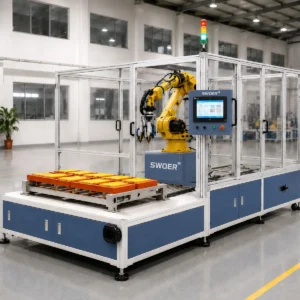
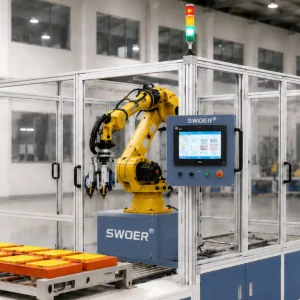
Assembly machines are automated production systems designed to combine multiple components into finished products. These machines can perform various processes, including part feeding, positioning, inserting, fastening, testing, and inspection.
Besides, assembly machines integrate multiple automation technologies to complete complex manufacturing processes. Manufacturers use these systems in industries such as electronics, medical devices, automotive components, and consumer products.
Consequently, customized assembly machines provide flexible solutions for products with unique structures, complex components, or high production requirements.
Key Differences Between Automatic Riveting Machines and Assembly Machines
1. Production Functions
Automatic riveting machines mainly focus on joining components through riveting operations. These systems control riveting force, speed, and positioning accuracy to create stable connections.
In contrast, assembly machines complete multiple production steps beyond fastening. These systems can manage component feeding, installation, inspection, and final assembly processes within one automated platform.
Therefore, manufacturers should choose automatic riveting machines when fastening is the main requirement and select assembly machines when products require multiple assembly operations.
2. Machine Structure and Process Design
Automatic riveting machines usually include rivet feeding systems, positioning mechanisms, riveting heads, and control units. These components work together to ensure accurate and repeatable riveting performance.
Meanwhile, assembly machines often include more complex structures, such as vibratory bowl feeders, flexible feeders, robotic systems, vision inspection systems, and testing modules.
As a result, assembly machines provide broader automation capabilities, while automatic riveting machines deliver specialized fastening performance.
3. Application Industries
Automotive manufacturers use automatic riveting machines for metal brackets, mechanical parts, and structural components that require strong connections.
Electronics manufacturers and medical device producers often choose assembly machines because these industries require precise handling of multiple small components.
Similarly, factories producing plastic parts, hardware products, and consumer goods select automation systems based on their production processes and product requirements.
Benefits of Automatic Riveting Machines
Automatic riveting machines offer several advantages for manufacturers that need reliable fastening solutions.
Firstly, these machines improve riveting consistency by applying controlled pressure and accurate positioning during every cycle. This reduces product defects caused by manual operation errors.
Secondly, automatic riveting machines increase production speed because they complete repetitive fastening tasks continuously without frequent operator intervention.
Additionally, these systems reduce labor requirements and create safer working environments by minimizing manual riveting operations.
Benefits of Assembly Machines
Assembly machines provide manufacturers with complete automation solutions for complex production lines.
Firstly, these machines combine multiple processes into one system, which reduces material handling time and improves overall production efficiency.
Secondly, assembly machines maintain stable quality because automated processes reduce human errors during component installation.
Moreover, customized assembly machines support different product designs and allow manufacturers to upgrade production capacity as market demands change.
How to Choose Between Automatic Riveting Machines and Assembly Machines?
Manufacturers should evaluate their production goals before selecting automation equipment. Companies that mainly need fast and accurate riveting operations can benefit from automatic riveting machines.
However, factories that require multiple assembly steps, component handling, and quality inspection should consider assembly machines.
Furthermore, manufacturers should analyze factors such as product structure, production volume, component complexity, and future expansion plans before making a decision.
Ultimately, the right automation solution depends on the specific manufacturing process rather than the machine type alone.
Why Choose Customized Automation Solutions?
Customized automation equipment helps manufacturers achieve better performance because every production line has different requirements.
For example, customized automatic riveting machines can include special feeding systems and tooling designs for different rivet sizes and product structures. Customized assembly machines can integrate robotics, vision inspection, and intelligent feeding systems to improve production flexibility.
Therefore, working with an experienced automation manufacturer allows companies to develop machines that match their exact production needs.
Conclusion
Automatic riveting machines and assembly machines support modern manufacturing by improving efficiency, accuracy, and production consistency. Automatic riveting machines specialize in fastening operations, while assembly machines provide wider automation capabilities for complete product assembly.
Meanwhile, selecting the correct machine depends on production requirements, product complexity, and automation goals. With customized automation solutions, manufacturers can improve productivity and build more efficient production lines.
FAQs
Automatic riveting machines focus on joining components with rivets, while assembly machines complete multiple manufacturing processes such as feeding, positioning, fastening, and inspection.
Yes. Customized assembly machines can integrate riveting modules together with feeding systems, robotic systems, and inspection equipment.
Both machines support high-volume production. Automatic riveting machines suit repetitive fastening tasks, while assembly machines fit complex production processes requiring multiple operations.
Yes. Manufacturers can customize riveting machines based on product size, rivet type, production speed, and automation requirements.
Manufacturers should consider product design, assembly processes, production capacity, quality requirements, and future expansion needs before choosing equipment.
