
Introduction
Modern manufacturers demand faster production, higher accuracy, and consistent product quality across different industries. Assembly machines with vision inspection systems combine automated assembly processes with advanced camera technology to detect defects, verify components, and improve overall manufacturing performance.
Additionally, these integrated systems help companies reduce manual inspection work while maintaining stable production standards. Electronics, automotive, medical, and precision component manufacturers increasingly use vision-based assembly machines to achieve reliable and efficient automation.
What Are Assembly Machines with Vision Inspection Systems?
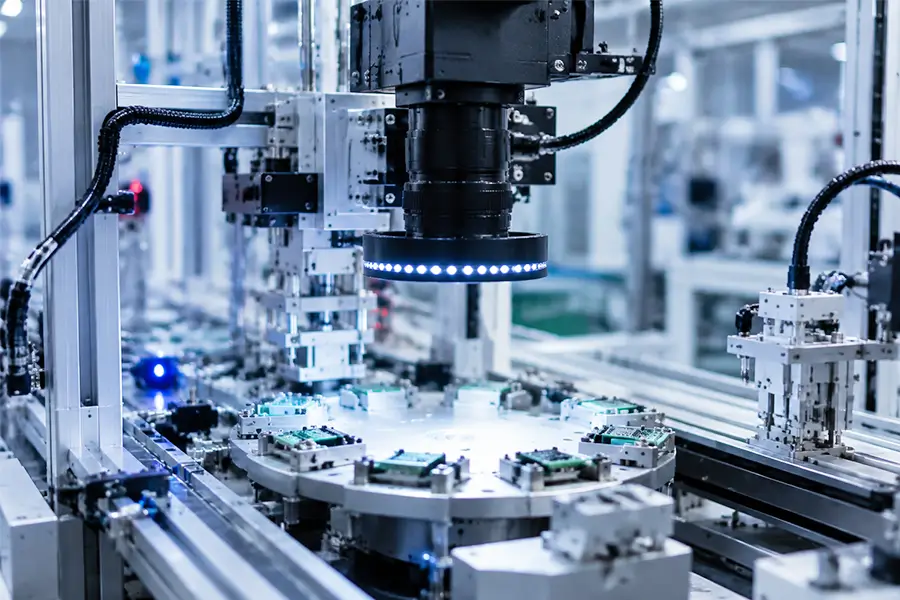
Assembly machines with vision inspection systems combine automated assembly equipment with intelligent image processing technology. These machines use industrial cameras, sensors, and software algorithms to check component positions, product conditions, and assembly results during production.
Furthermore, these systems allow manufacturers to identify errors immediately instead of detecting problems after completing large production batches. Automated inspections improve quality control and help production teams maintain consistent output.
Benefits of Assembly Machines with Vision Inspection Systems
1. Improve Assembly Accuracy
Assembly machines with vision inspection systems increase precision by checking component placement and assembly conditions in real time. These machines use cameras to compare actual products with programmed standards and detect incorrect positions or missing parts.
Moreover, manufacturers can reduce assembly mistakes caused by human factors. This advantage becomes especially important when production lines handle small, complex, or high-precision components.
2. Enhance Quality Control
Vision inspection systems provide continuous monitoring throughout the assembly process. These systems detect defects such as incorrect installation, damaged components, missing parts, and product variations.
In addition, automated inspection allows manufacturers to maintain stable quality without relying only on manual checking. Production teams can improve reliability while reducing defective products reaching customers.
3. Increase Production Efficiency
Assembly machines with integrated vision systems complete multiple processes automatically, including feeding, positioning, assembling, and inspection.
Meanwhile, manufacturers can shorten production cycles because machines perform inspections during assembly instead of requiring separate quality checks. This improves production speed and allows factories to handle higher output demands.
4. Reduce Labor Requirements
Automated assembly solutions reduce the need for workers to perform repetitive assembly and inspection tasks. Operators can focus on machine management, maintenance, and production optimization.
Therefore, manufacturers can lower labor costs while improving workplace efficiency. These benefits make automated assembly machines suitable for industries with high-volume manufacturing requirements.
Applications of Assembly Machines with Vision Inspection Systems
Electronics Manufacturing
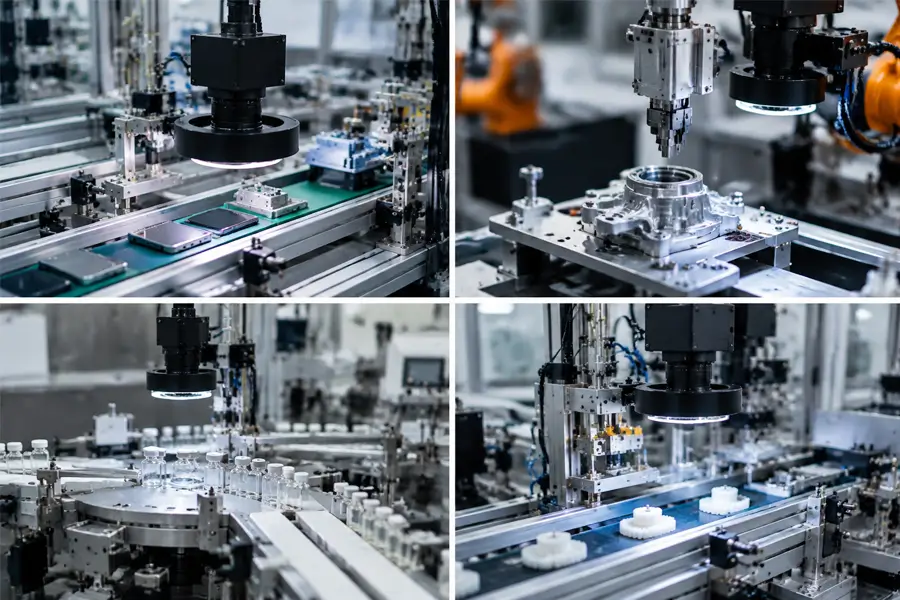
Electronics manufacturers use assembly machines with vision inspection systems for assembling connectors, sensors, circuit components, and small precision parts. These machines verify component positions and ensure accurate assembly results.
Furthermore, vision technology helps electronics factories maintain strict quality requirements for compact and delicate products.
Automotive Components
Automotive suppliers apply automated assembly machines with vision inspection systems for assembling mechanical parts, plastic components, and electronic modules.
Additionally, these machines help manufacturers improve consistency and reduce errors in automotive production lines where reliability plays an important role.
Medical Device Production
Medical device manufacturers require high accuracy and strict quality control during production. Assembly machines with vision inspection systems help verify critical components and maintain compliance with demanding manufacturing standards.
Moreover, automated inspection reduces risks caused by incorrect assembly and improves product reliability.
Precision Hardware Industries
Precision hardware manufacturers use these systems to assemble small metal parts, fasteners, and customized components. Vision inspection technology ensures accurate positioning and detects production issues quickly.
As a result, manufacturers can achieve better product consistency and improve overall manufacturing efficiency.
How Vision Inspection Systems Work in Assembly Machines
Vision inspection systems capture product images through industrial cameras during the assembly process. These images are then analyzed by software to compare actual conditions with preset requirements.
Next, the system identifies defects and sends signals to the assembly machine for sorting, adjustment, or rejection processes. This automated feedback allows production lines to maintain stable quality without interrupting operations.
Why Choose Customized Assembly Machines with Vision Inspection Systems?
Different products require different assembly methods, component sizes, and inspection standards. Customized assembly machines allow manufacturers to develop solutions based on specific production requirements.
Furthermore, customized systems can integrate feeding systems, robotic arms, vision inspection technology, and automatic testing functions into one complete production solution.
For companies in Malaysia and other manufacturing markets, customized automation equipment provides flexibility for improving productivity and supporting future production expansion.
Conclusion
Assembly machines with vision inspection systems help manufacturers achieve higher accuracy, better quality control, and improved production efficiency. These automated solutions combine assembly functions and intelligent inspection technology to reduce errors and optimize manufacturing processes.
Therefore, industries such as electronics, automotive, medical devices, and precision hardware can benefit from adopting vision-based automation systems. Customized assembly machines provide reliable solutions for companies seeking smarter and more efficient production lines.
FAQs
An assembly machine with a vision inspection system is automated equipment that combines product assembly processes with camera-based inspection technology to check quality and accuracy during production.
Industries such as electronics, automotive, medical devices, food packaging, and precision hardware commonly use these machines for automated assembly and quality inspection.
Yes. Manufacturers can customize assembly machines according to product designs, production requirements, feeding methods, inspection standards, and automation levels.
Vision inspection systems detect assembly errors, missing components, and product defects automatically, helping manufacturers maintain consistent quality during high-volume production.
