
Introduction
Connector manufacturing requires high precision, stable quality, and efficient production processes. As electronic devices become smaller and more complex, traditional manual assembly methods face challenges such as inconsistent quality, higher labor costs, and limited production capacity.
An automatic assembly machine for connector manufacturing provides an advanced solution by automating connector feeding, component assembly, inspection, and testing processes. Manufacturers can achieve faster production speed, improved accuracy, and consistent product quality.
For companies in Malaysia’s electronics and automotive industries, adopting automated assembly solutions helps improve competitiveness and meet increasing market demands.
What Is an Automatic Assembly Machine for Connector Manufacturing?
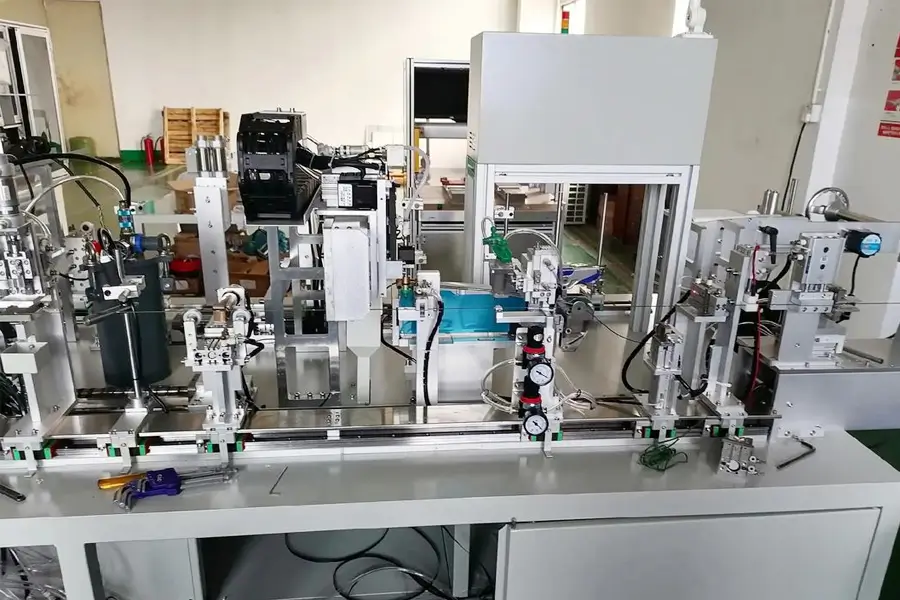
An automatic assembly machine is a specialized industrial system designed to assemble connector components automatically. The machine integrates multiple processes, including part feeding, positioning, insertion, fastening, inspection, and output.
Unlike manual assembly, automated systems use precision mechanisms, servo motors, sensors, and vision inspection technology to ensure every connector meets production requirements.
A typical connector assembly machine may include:
- Automatic feeding systems
- Precision positioning units
- Robotic assembly mechanisms
- Connector insertion systems
- Vision inspection systems
- Automatic testing modules
- Conveyor transfer systems
These systems help manufacturers reduce manual operations while maintaining high production accuracy.
Why Use Automatic Assembly Machines for Connector Manufacturing?
1. Increase Production Efficiency
Connector manufacturers often produce thousands or millions of parts annually. Manual assembly processes can limit production speed and increase labor dependency.
Automatic assembly machines enable continuous production with faster cycle times. The system can perform repetitive assembly tasks consistently, helping factories increase output and improve overall production efficiency.
For Malaysian manufacturers facing rising labor costs, automation provides a practical way to optimize production capacity.
2. Improve Connector Assembly Accuracy
Connectors require precise component positioning because even small assembly errors can affect electrical performance.
Automatic assembly machines use:
- High-precision mechanical structures
- Servo control systems
- Sensors and detection devices
- Vision inspection technology
to ensure accurate component placement and reliable assembly results.
This reduces defects caused by human operation and improves product consistency.
3. Reduce Manufacturing Costs
Although automatic assembly equipment requires initial investment, it helps reduce long-term production costs.
Benefits include:
- Lower labor requirements
- Reduced material waste
- Fewer defective products
- Higher production efficiency
- Less dependence on manual operations
For connector manufacturers, automation improves cost control while maintaining stable product quality.
Main Applications of Connector Assembly Machines
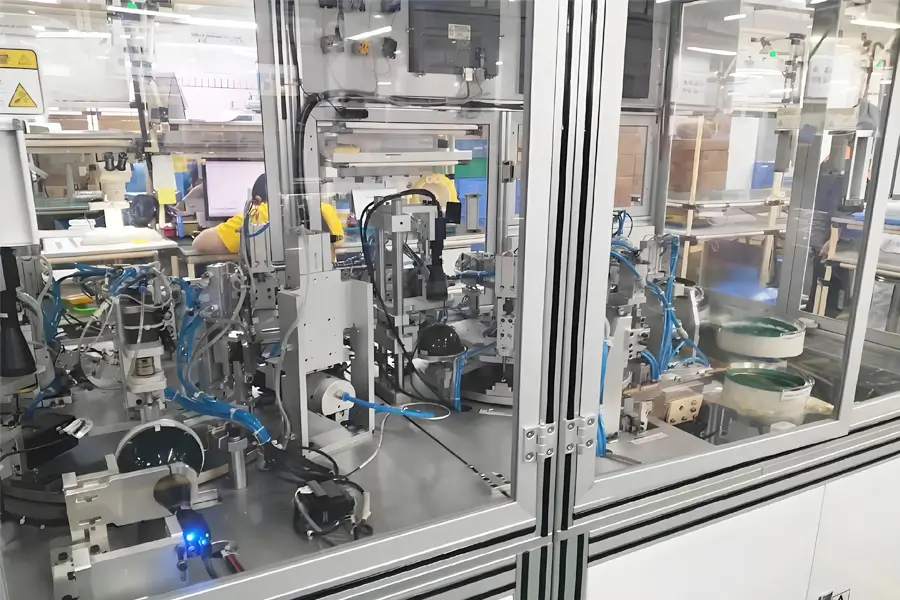
Automatic assembly machines are widely used in industries that require high-quality connectors, including:
Electronics Industry
Connector assembly automation supports the production of:
- PCB connectors
- Wire connectors
- Terminal connectors
- Electronic component connectors
The machines ensure precise assembly for small and delicate electronic parts.
Automotive Industry
Modern vehicles require a large number of connectors for electrical and electronic systems.
Automatic connector assembly machines are used for:
- Automotive wiring connectors
- Battery connectors
- Sensor connectors
- Electrical control connectors
Automation helps automotive suppliers achieve high reliability and production efficiency.
Consumer Electronics Industry
Electronic products require compact and reliable connectors. Automated assembly improves production speed for products such as:
- Mobile devices
- Computers
- Home appliances
- Smart devices
Key Features of Automatic Connector Assembly Machines
High-Speed Assembly
Automatic assembly equipment can operate continuously with stable cycle times, making it suitable for mass production environments.
Flexible Production Capability
Modern machines can support different connector designs through quick tooling changes and adjustable assembly parameters.
Integrated Vision Inspection
Vision systems can automatically detect:
- Missing components
- Incorrect positions
- Assembly defects
- Surface problems
This improves quality control during production.
Smart Automation Control
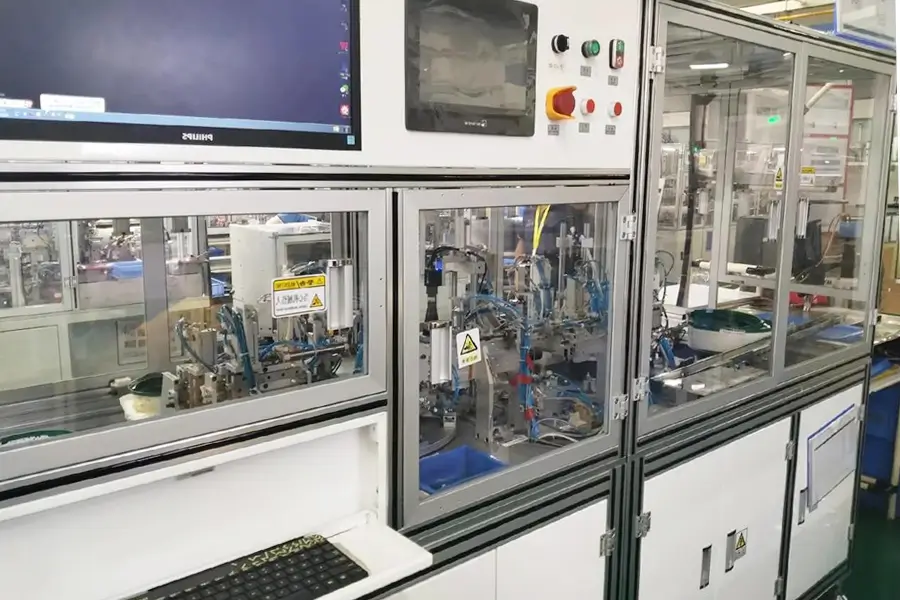
Advanced PLC and HMI systems allow operators to monitor production status, adjust parameters, and manage machine performance easily.
How to Choose the Right Connector Assembly Machine?
When selecting an automatic assembly machine, manufacturers should consider several factors:
1. Connector Type and Design
Different connectors require different assembly methods. The machine should match the product structure, size, and assembly requirements.
2. Production Capacity
- Manufacturers should evaluate:
- Required output volume
- Cycle time requirements
- Future production expansion plans
3. Automation Level
Depending on production needs, companies can choose:
- Semi-automatic assembly machines
- Fully automatic assembly machines
- Complete automated production lines
4. Integration Capability
A good assembly solution should integrate with:
- Feeding systems
- Vision inspection systems
- Testing equipment
- Manufacturing lines
Automatic Assembly Machine Solutions for Malaysia Manufacturers
Malaysia has become an important manufacturing hub for electronics, automotive components, and industrial products. Many companies are upgrading production lines to improve efficiency and product quality.
SWOER provides customized automation solutions including automatic assembly machines, feeding systems, and intelligent inspection systems for different manufacturing applications.
By combining precision automation technology with flexible production solutions, manufacturers can improve productivity and achieve more reliable assembly processes.
Conclusion
An automatic assembly machine for connector manufacturing helps companies improve production efficiency, assembly accuracy, and product quality. With advanced automation technologies such as precision feeding, robotic assembly, and vision inspection, manufacturers can build faster and more reliable production systems.
For connector manufacturers in Malaysia, investing in automated assembly equipment is an effective way to reduce production challenges, increase competitiveness, and support future manufacturing growth.
FAQs
An automatic assembly machine is used to assemble connector components automatically, including feeding, positioning, inserting, inspecting, and testing processes.
Connector assembly machines are widely used in electronics, automotive, telecommunications, medical equipment, and consumer electronics industries.
Yes. Manufacturers can customize assembly machines based on connector design, production requirements, automation level, and integration needs.
The main benefits include higher production speed, improved accuracy, reduced labor costs, and better product quality control.
Vision inspection systems automatically detect assembly defects and ensure connectors meet quality standards before shipment.
