
Introduction
Automotive parts manufacturing in Malaysia is growing rapidly, driven by demand for higher precision, faster production cycles, and lower labor dependency. Manufacturers now rely on assembly machines to meet strict quality standards while improving efficiency.
Modern automotive production no longer depends on manual assembly alone. Instead, companies integrate automated systems to assemble components such as connectors, sensors, fasteners, engine parts, and electronic modules with high accuracy.
SWOER Malaysia supports this shift by providing automation solutions designed for high-speed, stable, and scalable automotive production lines.
Why Assembly Machines Matter in Automotive Production
Automotive parts require consistent accuracy and repeatability. Even small defects can affect safety and performance.
Assembly machines help manufacturers:
- Improve assembly precision
- Reduce human error
- Increase production speed
- Maintain consistent product quality
- Lower long-term production costs
In Malaysia’s competitive manufacturing sector, automation is no longer optional—it is a necessity.
Key Types of Assembly Machines Used in Automotive Manufacturing
1. Automated Screw Assembly Machines
These machines handle fastening operations for automotive components such as dashboards, sensors, and electronic housings.
2. Press-Fit Assembly Machines
Used for inserting bearings, bushings, and mechanical components with controlled force.
3. Robotic Assembly Systems
Integrated robotic arms such as delta robots handle pick-and-place tasks for small automotive parts.
4. PCB & Electronic Assembly Machines
Used for automotive electronics like control modules, switches, and sensors.
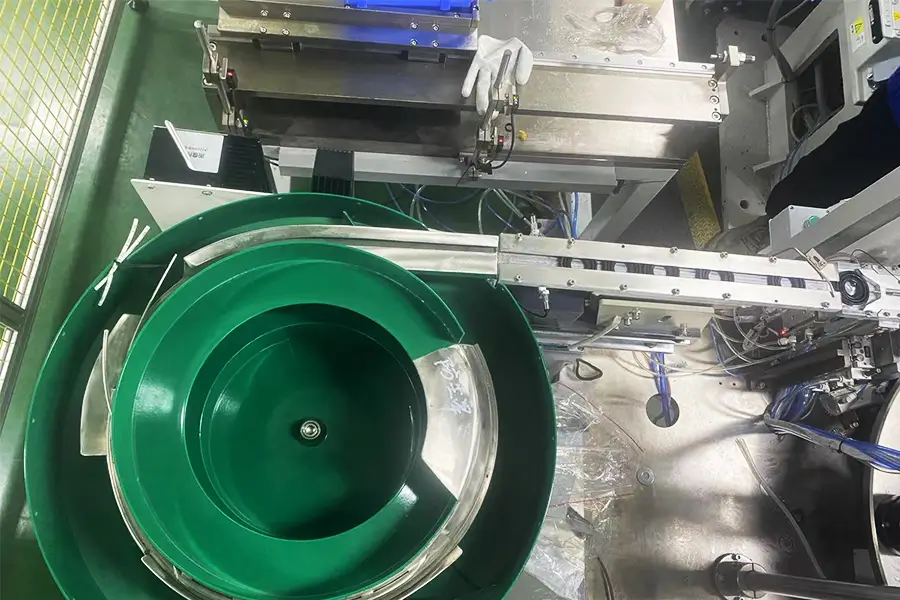
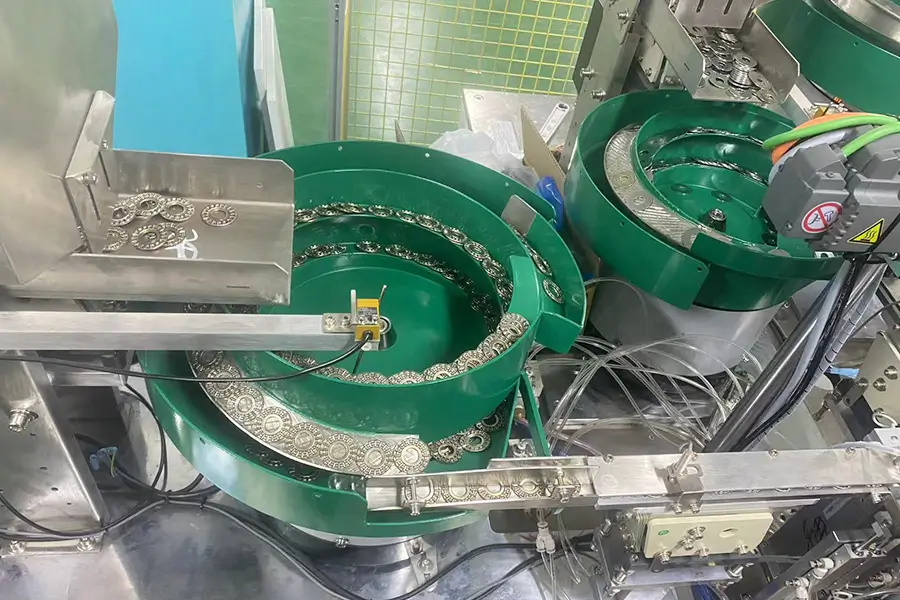
5. Flexible Feeding Systems
Vibratory bowl feeders and flex feeders ensure continuous and stable part supply to assembly lines.
Applications in Automotive Parts Manufacturing
Assembly machines are widely used in:
- Engine component assembly
- Automotive electronics manufacturing
- Interior plastic parts assembly
- Sensor and connector production
- Small metal part assembly
- EV (Electric Vehicle) component lines
As Malaysia continues to expand its EV and electronics manufacturing base, demand for automation systems keeps increasing.
Benefits of Using Assembly Machines in Malaysia
Higher Productivity
Machines operate continuously with minimal downtime, improving output.
Stable Quality Control
Each part is assembled with consistent force and positioning.
Reduced Labor Dependency
Manufacturers reduce reliance on manual labor, especially for repetitive tasks.
Scalable Production
Automation systems can expand easily as production demand grows.
Integration with Smart Factory Systems
Modern assembly machines connect with vision inspection systems and robotic arms for full automation.
How to Choose the Right Assembly Machine
When selecting an assembly machine for automotive production, consider:
- Type of component (metal, plastic, electronic)
- Production volume requirements
- Level of automation needed
- Integration with existing production lines
- Precision and tolerance requirements
- Maintenance and upgrade flexibility
SWOER Malaysia provides customized assembly solutions based on specific production needs, helping manufacturers build efficient automated lines.
Future of Automotive Assembly in Malaysia
Malaysia’s automotive industry is moving toward smart manufacturing. With EV growth and global supply chain demands, automation will play a central role.
Future assembly systems will focus on:
- AI-driven inspection
- Fully automated robotic assembly lines
- Flexible multi-product production
- Real-time quality monitoring
Companies that adopt automation early will gain stronger competitiveness in both local and global markets.
Conclusion
Assembly machines are transforming automotive parts manufacturing in Malaysia. They improve precision, reduce costs, and support large-scale production with consistent quality.
SWOER Malaysia delivers automation solutions designed for modern automotive production lines, helping manufacturers upgrade from manual processes to smart manufacturing systems.
