


Introduction
In modern manufacturing and assembly lines, efficiency depends on the smooth movement of parts from one process to the next. A vibratory feeder plays a crucial role in automated production by feeding, orienting, and delivering components consistently and accurately. Industries such as electronics, automotive, medical devices, packaging, and consumer products rely on vibratory feeders to increase productivity and reduce manual labor.
This article explains the function of vibratory feeders, how they work, their benefits, and why they remain one of the most widely used automation solutions in manufacturing.
How Does a Vibratory Feeder Work?
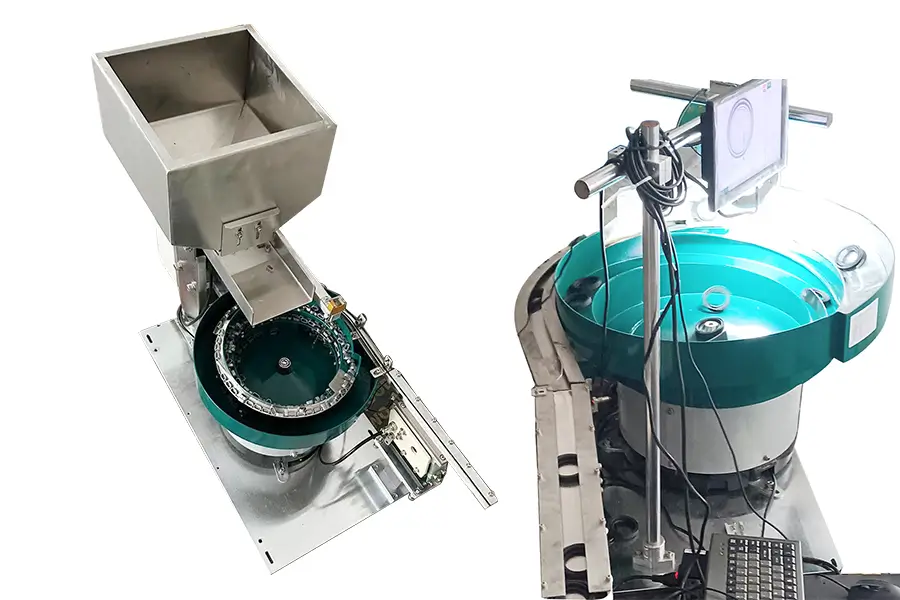
A vibratory feeder uses controlled vibrations to move parts along a feeding track. The system typically consists of a bowl, base, controller, and tooling designed specifically for the shape and size of the component.
As the feeder vibrates, parts move upward along a spiral track inside the bowl. Special tooling and guides orient the parts into the correct position while rejecting incorrectly positioned components. Once aligned, the feeder delivers the parts to downstream equipment such as assembly machines, robots, packaging systems, or inspection stations.
This continuous process ensures a steady flow of components without manual intervention.
The Primary Function of a Vibratory Feeder
The main function of a vibratory feeder is to automatically feed and orient parts for production processes. Instead of relying on operators to sort and position components, the feeder performs these tasks automatically.
Key functions include:
- Feeding bulk parts from a hopper or bowl
- Orienting components into a specific position
- Separating tangled or overlapping parts
- Delivering parts at a controlled speed
- Supplying components continuously to automated equipment
These functions help manufacturers maintain consistent production rates and improve operational efficiency.
Why Part Orientation Is Important
Many automated assembly processes require parts to enter machines in a specific orientation. Even a small positioning error can cause jams, production delays, or product defects.
A vibratory feeder solves this challenge by using customized tooling that identifies correctly oriented parts and removes incorrectly positioned ones. This ensures that only properly aligned components reach the next production stage.
For industries producing high volumes of small parts, accurate orientation significantly improves quality control and reduces downtime.
Benefits of Using a Vibratory Feeder
Manufacturers choose vibratory feeders because they offer several operational advantages:
Increased Productivity
Continuous automatic feeding eliminates manual handling and keeps production lines running efficiently.
Improved Accuracy
Custom tooling ensures precise part orientation and delivery.
Reduced Labor Costs
Automation reduces the need for workers to sort and feed components manually.
Consistent Performance
Vibratory feeders provide a stable and reliable supply of parts, helping maintain production targets.
Easy Integration
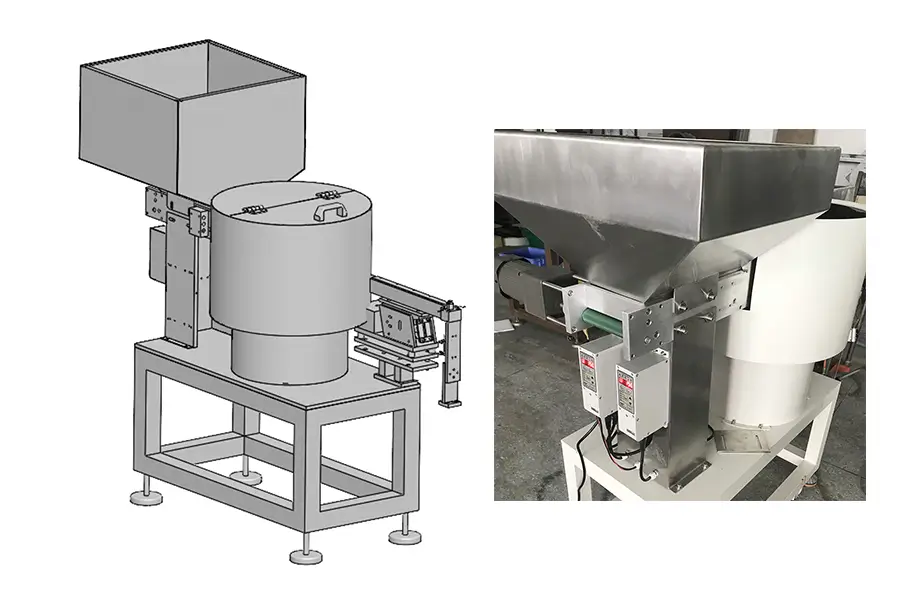
The system integrates easily with conveyors, robots, vision inspection systems, packaging equipment, and assembly machines.
These benefits make vibratory feeders a valuable investment for businesses seeking greater automation and efficiency.
Common Applications of Vibratory Feeders
Vibratory feeders support a wide range of industries and applications, including:
Electronics Manufacturing
Feeding screws, connectors, terminals, chips, and small electronic components.
Automotive Production
Supplying clips, fasteners, springs, washers, and precision parts for assembly lines.
Medical Device Manufacturing
Handling medical components that require accurate positioning and consistent feeding.
Packaging Industry
Feeding caps, lids, closures, and packaging accessories.
Consumer Goods Manufacturing
Orienting and feeding small plastic and metal parts used in household products and appliances.
Because of their flexibility, vibratory feeders can handle components of various shapes, sizes, and materials.
How SWOER Malaysia Provides Customized Vibratory Feeding Solutions
Every component presents unique feeding challenges. At SWOER Malaysia, we design and manufacture customized vibratory feeder systems that match specific production requirements.
Our solutions include:
- Custom vibratory bowl feeders
- Linear feeders and tracks
- Centrifugal feeding systems
- Vision inspection integration
- Noise-reduction covers
- Robotic automation integration
- Complete feeding and sorting systems
By tailoring each feeder to the customer’s application, SWOER helps manufacturers improve efficiency, reduce downtime, and achieve consistent production performance.
Conclusion
The function of a vibratory feeder goes far beyond simply moving parts. It automatically feeds, sorts, orients, and delivers components with speed and precision, making it an essential part of modern automation systems. By reducing manual labor, increasing production efficiency, and ensuring accurate part positioning, vibratory feeders help manufacturers achieve higher productivity and better product quality.
Whether you operate in electronics, automotive, medical, or packaging industries, a customized vibratory feeder from SWOER Malaysia can streamline your production process and support long-term business growth.
FAQs
The main purpose is to automatically feed and orient parts so that automated equipment can process them efficiently and accurately.
Vibratory feeders can handle plastic parts, metal components, fasteners, springs, electronic parts, caps, medical components, and many other small products.
Yes. Many modern vibratory feeding systems integrate with vision inspection cameras to verify part quality and orientation before assembly.
Yes. Properly designed vibratory feeders can deliver parts continuously at high speeds while maintaining accuracy and consistency.
The ideal feeder depends on part size, shape, material, production speed, and automation requirements. A customized solution usually delivers the best performance.
SWOER Malaysia provides customized feeding systems, automation expertise, reliable engineering support, and solutions designed to maximize productivity and efficiency.
