
Introduction
Small parts manufacturing requires high precision, stable production speed, and consistent product quality. In industries such as electronics, automotive components, medical devices, plastic parts, and consumer products in Malaysia, choosing the right assembly machine can directly affect production efficiency and operating costs.
An assembly machine helps manufacturers automate repetitive assembly processes, reduce manual errors, and improve output capacity. However, selecting the right equipment requires understanding product requirements, production volume, automation level, and future expansion needs.
Working with an experienced assembly machine supplier can help companies choose a suitable solution that matches their manufacturing goals. This guide explains the key factors to consider when selecting an assembly machine for small parts manufacturing.
Understand Your Product and Assembly Requirements
Before choosing an assembly machine, manufacturers should clearly understand their product structure and assembly process.
Important factors include:
- Part size and shape
- Number of components to assemble
- Assembly steps required
- Required accuracy level
- Production speed requirements
- Quality inspection needs
For example, small electronic components may require precise feeding, positioning, and pressing operations, while automotive plastic parts may require stronger assembly force and higher production stability.
A clear understanding of your assembly process helps determine whether you need a standard machine or a custom assembly machine designed specifically for your product.
Choose the Right Automation Level
Assembly machines come in different automation levels depending on production needs.
For small parts manufacturing, common options include:
Semi-Automatic Assembly Machines
Operators load materials while the machine completes specific assembly tasks. This option is suitable for low-volume production or products requiring frequent changes.
Fully Automatic Assembly Machines
A fully automatic system can handle feeding, positioning, assembling, testing, and inspection with minimal human involvement. It is ideal for high-volume manufacturing.
Working with an experienced automatic assembly machine manufacturer allows companies to develop a system that improves production efficiency while reducing labor dependency.
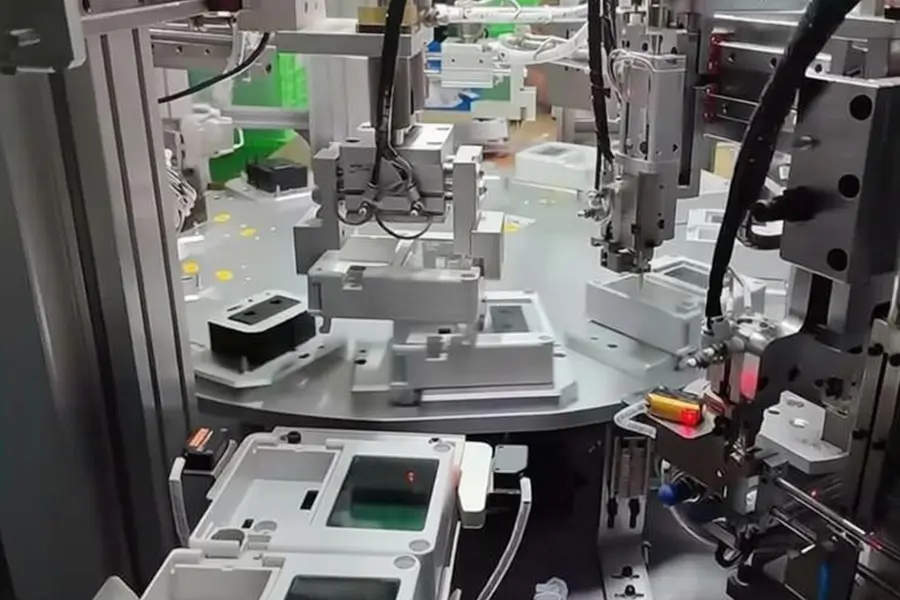
Consider Feeding and Material Handling Systems
Small parts often require accurate feeding before assembly. An unstable feeding system can cause production delays and quality problems.
Common feeding solutions include:
- Vibratory bowl feeders
- Flexible feeders
- Centrifugal feeders
- Step feeders
- Hopper feeding systems
A good assembly machine should integrate smoothly with the feeding system to ensure continuous material supply.
For Malaysian manufacturers producing small components, choosing a machine with reliable feeding technology can improve production stability and reduce downtime.
Evaluate Machine Accuracy and Production Speed
Precision is one of the most important factors in small parts assembly.
A suitable assembly machine should provide:
- Accurate component positioning
- Stable operation during long production hours
- Fast cycle time
- Consistent assembly quality
Manufacturers should evaluate:
- How many products can be assembled per minute
- Machine repeatability
- Error detection functions
- Maintenance requirements
High-speed assembly machines combined with inspection systems can help manufacturers maintain quality while increasing production output.
Select a Reliable Assembly Machine Supplier
Choosing the right supplier is as important as choosing the machine itself.
A professional assembly machine supplier should provide:
- Engineering support
- Customized automation solutions
- Installation and commissioning services
- Technical support
- Spare parts availability
For Malaysian companies, selecting a supplier with experience in industrial automation can reduce project risks and ensure smoother production implementation.
A reliable supplier should understand different industries and provide solutions based on actual manufacturing requirements rather than only offering standard equipment.
Plan for Future Production Expansion
When investing in an assembly machine, manufacturers should consider future business growth.
A flexible machine design allows companies to:
- Increase production capacity
- Add new products
- Upgrade automation functions
- Connect with other production equipment
A custom assembly machine can provide better flexibility for companies with unique products or changing production requirements.
For example, modular designs allow manufacturers to upgrade feeding systems, robotic handling, or inspection modules without replacing the entire production line.
Conclusion
Choosing the right assembly machine for small parts manufacturing requires careful evaluation of product requirements, automation level, feeding system, accuracy, supplier experience, and future production needs.
For Malaysian manufacturers, investing in a reliable automation solution can improve production efficiency, reduce labor costs, and maintain consistent product quality.
By working with a professional automatic assembly machine manufacturer or experienced assembly machine supplier, companies can develop an efficient assembly solution that supports long-term manufacturing growth.
FAQs
An assembly machine is used to automatically or semi-automatically combine multiple parts into a finished product. It improves production speed, accuracy, and consistency.
You should consider product size, assembly process, production volume, required accuracy, automation level, and future expansion plans before selecting a machine.
Assembly machines are widely used in electronics, automotive parts, medical devices, plastic components, hardware, and consumer product manufacturing.
A standard assembly machine is designed for common applications, while a custom assembly machine is developed according to specific product requirements and production processes.
An experienced automatic assembly machine manufacturer can provide customized solutions, improve production efficiency, and ensure the machine meets specific manufacturing needs.
Yes. Modern assembly machines can be integrated with vibratory feeders, flexible feeders, vision inspection systems, and robotic systems to create a complete automated production line.
