
Introduction
In modern manufacturing, choosing the right assembly machine is important for improving production efficiency, reducing labor costs, and maintaining consistent product quality. For Malaysian manufacturers in industries such as electronics, automotive components, medical products, and plastic parts, the decision between a standard assembly machine and a custom assembly machine depends on product requirements and production goals.
A standard machine can provide a faster and more affordable solution for common assembly processes, while a customized system offers greater flexibility for unique products and complex manufacturing needs.
SWOER Malaysia provides industrial automation solutions, including customized assembly systems, feeding systems, and automation equipment designed to help manufacturers improve production performance. This article explains the differences between custom and standard assembly machines to help you choose the right solution.
What Is a Standard Assembly Machine?
A standard assembly machine is a pre-designed automation system developed for common assembly applications. It usually follows a fixed structure and is suitable for products with stable designs and simple assembly processes.
Typical features include:
- Standard machine structure
- Shorter delivery time
- Lower investment cost
- Easier maintenance
- Suitable for repeated production tasks
Standard assembly machines are commonly used for applications such as simple part insertion, pressing, fastening, and basic component assembly.
For Malaysian manufacturers producing high-volume products with fewer design changes, a standard solution can provide reliable performance and improve production efficiency.
What Is a Custom Assembly Machine?
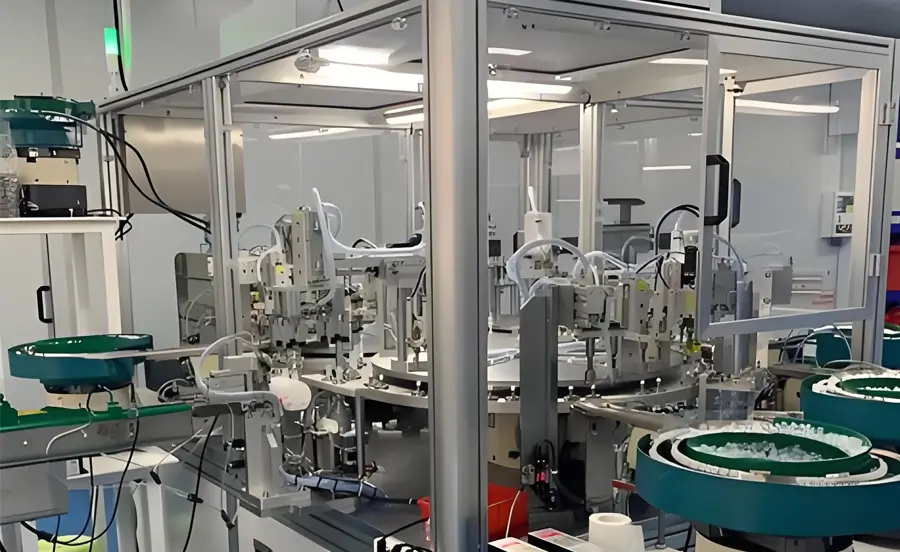
A custom assembly machine is designed according to a company’s specific product requirements, assembly process, and production targets.
Unlike standard machines, customized solutions can include:
- Special feeding systems
- Robotic handling systems
- Vision inspection functions
- Multiple assembly stations
- Customized tooling and fixtures
A custom solution is suitable for products with unique structures, complicated assembly steps, or strict quality requirements.
SWOER Malaysia focuses on providing customized automation solutions that combine feeding technology, precision assembly, and inspection systems to meet different manufacturing needs.
Custom Assembly Machine vs Standard Assembly Machine: Key Differences
The main differences between these two solutions include:
Flexibility
A standard assembly machine works well for fixed products, while a custom assembly machine can adapt to special products and changing production requirements.
Cost
Standard machines usually require lower initial investment. Custom machines may have a higher upfront cost but can provide better long-term value for complex production.
Production Efficiency
Both options can improve efficiency, but customized systems can optimize every production step according to the product process.
Expansion Capability
A custom system can be designed with future upgrades, such as adding robots, feeders, or inspection systems.
Choosing Between Semi Automatic Assembly Machine and Fully Automatic Assembly Line
Manufacturers should also consider the required automation level.
A semi automatic assembly machine allows operators to handle some processes while the machine completes repetitive tasks. It is suitable for:
- Medium production volume
- Products requiring manual adjustment
- Companies starting automation
A fully automatic assembly line completes the entire production process automatically, including feeding, assembly, testing, and inspection.
It is ideal for:
- High-volume manufacturing
- Stable product designs
- Companies requiring maximum efficiency
For Malaysian factories, the right choice depends on production volume, labor availability, product complexity, and investment plans.
Which Industries Need Custom Assembly Solutions?
Many industries require customized assembly machines because their products have different structures and manufacturing requirements.
Common applications include:
Electronics Industry
Used for assembling small precision components, connectors, switches, and electronic parts.
Automotive Industry
Used for plastic parts, sensors, fasteners, and other automotive components.
Medical Industry
Requires high accuracy and stable production quality for medical devices and components.
Consumer Products
Suitable for products requiring flexible production and fast model changes.
SWOER Malaysia helps manufacturers develop automation solutions that match specific industry requirements.
How to Choose the Right Assembly Machine Supplier?
Choosing the right supplier is an important step before investing in automation equipment.
A reliable supplier should provide:
- Engineering consultation
- Machine customization capability
- Production testing
- Installation support
- After-sales service
SWOER Malaysia provides automation solutions for manufacturers looking to improve assembly efficiency. With experience in feeding systems, automation equipment, and customized machinery, SWOER supports companies in developing suitable assembly solutions.
Before choosing a machine, manufacturers should evaluate product requirements, production volume, future expansion, and return on investment.
Conclusion
There is no single answer to whether a custom assembly machine or standard assembly machine is better. The right choice depends on your product design, production volume, automation goals, and budget.
Standard machines are suitable for simple and stable production, while custom solutions provide better flexibility for complex manufacturing processes.
For Malaysian manufacturers looking to improve production efficiency, SWOER Malaysia provides customized automation solutions, from semi-automatic systems to fully automated production lines, helping businesses achieve reliable and efficient manufacturing.
FAQs
A standard assembly machine uses a fixed design for common applications, while a custom assembly machine is developed according to specific product and production requirements.
Yes, a custom assembly machine usually requires a higher initial investment because it involves special design, engineering, and manufacturing. However, it can provide better efficiency for unique production needs.
A semi automatic assembly machine is suitable when production requires some operator involvement, medium output, or flexible operation.
A fully automatic assembly line is a complete production system that automatically handles feeding, assembly, inspection, and product transfer with minimal manual operation.
Yes. SWOER Malaysia provides customized automation solutions based on customer production requirements, including assembly systems, feeding solutions, and automation integration.
You should consider product type, production volume, assembly complexity, quality requirements, and future expansion plans before selecting a machine.
