
Introduction
Machine assembly is the process of combining different parts, components, and systems to build a complete machine that can perform specific tasks. In modern manufacturing, machine assembly plays an important role in improving production efficiency, product quality, and automation levels.
For industries in Malaysia, such as electronics, automotive, food processing, and medical equipment manufacturing, automated machine assembly helps companies reduce manual work, increase accuracy, and achieve faster production. By using advanced assembly machines, manufacturers can create consistent and reliable products while saving time and production costs.
What Is Machine Assembly?
Machine assembly refers to the process of putting together mechanical parts, electrical components, and control systems into a complete working machine. The assembly process may include installing components, fastening parts, connecting systems, testing functions, and adjusting machine performance.
In simple terms, machine assembly transforms individual parts into a fully operational machine. For example, an automatic assembly machine may combine screws, plastic parts, metal components, or electronic parts into a finished product without requiring continuous manual operation.
In manufacturing, machine assembly can be completed manually, semi-automatically, or fully automatically depending on production requirements.
How Does Machine Assembly Work?
The machine assembly process usually follows several important steps:
1. Part Feeding
Components are supplied to the assembly system through feeding equipment such as vibratory bowl feeders, flexible feeders, or conveyor systems. These systems organize parts and deliver them in the correct position.
2. Component Positioning
Machines use precise mechanisms, sensors, or vision inspection systems to identify and position parts accurately before assembly.
3. Assembly Operation
The machine performs tasks such as inserting, pressing, riveting, screwing, welding, or gluing components together.
4. Quality Inspection
Sensors or vision systems check whether the assembled product meets quality standards.
5. Final Output
The completed product moves to the next production stage, packaging process, or storage area.
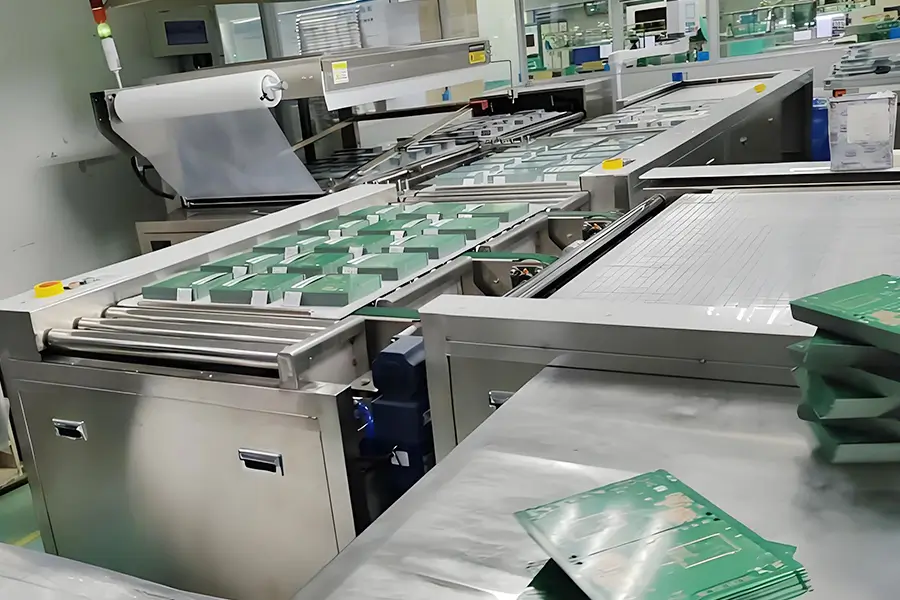
Modern machine assembly systems combine mechanical automation, robotics, and intelligent control technology to achieve high-speed and high-precision production.
What Are the Benefits of Machine Assembly?
Machine assembly provides many advantages for manufacturers, especially companies looking to improve automation in Malaysia.
Higher Production Efficiency
Automated assembly machines can operate continuously with stable speed, helping manufacturers increase output and reduce production time.
Better Product Quality
Machines provide consistent assembly accuracy and reduce human errors, ensuring every product meets the same quality requirements.
Lower Labor Costs
Automation reduces the need for repetitive manual assembly work, allowing employees to focus on higher-value tasks.
Flexible Production
Modern assembly machines can be customized for different products and production requirements, making them suitable for various industries.
Improved Safety
Machines can handle repetitive or complex operations, reducing workplace risks and improving production safety.
What Types of Products Use Machine Assembly?
Machine assembly is widely used across many industries in Malaysia, including:
Electronics Industry
Assembly machines help produce electronic components, switches, connectors, sensors, and small precision parts.
Automotive Industry
Manufacturers use automated assembly systems for vehicle components, plastic parts, fasteners, and mechanical assemblies.
Food and Beverage Industry
Assembly automation is used for packaging systems, filling equipment, and product handling processes.
Medical Industry
Precision assembly machines support the production of medical devices and healthcare components with strict quality requirements.
Consumer Products
Many daily products, such as household items and small devices, rely on automated assembly processes.
Machine Assembly vs Manual Assembly: What Is the Difference?
The main difference between machine assembly and manual assembly is the level of automation.
Manual assembly depends mainly on workers to complete production tasks. It is flexible but may have limitations in speed, consistency, and labor requirements.
Machine assembly uses automated equipment to perform repeated tasks with higher accuracy and efficiency. Although the initial investment is higher, automated systems can provide long-term benefits through improved productivity and reduced operating costs.
For Malaysian manufacturers facing increasing production demands, automated machine assembly is becoming an important solution for improving competitiveness.
How to Choose the Right Machine Assembly Solution?
Choosing the right machine assembly system depends on several factors:
Product Requirements
Different products require different assembly methods, tooling designs, and feeding systems.
Production Volume
High-volume production usually benefits from fully automated assembly machines, while smaller production lines may require flexible solutions.
Accuracy Requirements
Precision industries need advanced systems with accurate positioning and inspection functions.
Future Expansion
A scalable assembly system allows manufacturers to upgrade production
capacity as business grows.
Working with an experienced automation supplier can help companies design a suitable assembly solution based on their production goals.
Conclusion
Machine assembly is an essential part of modern manufacturing. It helps businesses combine components efficiently, improve product quality, and increase production capacity. With the development of automation technology, more manufacturers in Malaysia are adopting assembly machines to achieve faster, smarter, and more reliable production.
From electronics and automotive parts to food and medical products, machine assembly solutions provide a practical way for companies to improve manufacturing performance and stay competitive.
FAQs
Machine assembly means combining different parts and components together to create a complete working machine or product through manual, semi-automatic, or automatic processes.
An assembly machine is used to automatically combine parts, perform operations such as inserting, fastening, riveting, or testing, and improve production efficiency.
Machine assembly is widely used in electronics, automotive, medical, food processing, and consumer product industries.
An assembly machine focuses on combining components into a finished product, while a production machine may include processes such as machining, forming, or processing raw materials.
Manufacturers in Malaysia use automated assembly machines to improve efficiency, reduce labor dependency, increase product consistency, and support large-scale production.
A feeder system supplies and arranges components automatically, ensuring parts reach the assembly machine in the correct position and sequence for smooth production.
