
Introduction
Automatic assembly is changing modern manufacturing. Many factories in Malaysia now use assembly machines to improve speed, quality, and output. These machines reduce labor costs and help companies stay competitive.
From electronics to automotive parts, automatic assembly systems can handle many tasks. They can assemble small parts with high accuracy and work for long hours without stopping.
In this article, we explain how automatic assembly works, its main parts, and why more manufacturers choose it.
What Is an Automatic Assembly Machine?
An automatic assembly machine is a system that puts parts together without manual work. It uses feeders, robots, sensors, and control systems to complete assembly steps.
These machines can handle:
- Part feeding
- Positioning
- Screw fastening
- Press fitting
- Labeling
- Inspection
- Packaging
At SWOER, we build custom assembly machines for different industries. Each machine is made based on product size, speed, and process needs.
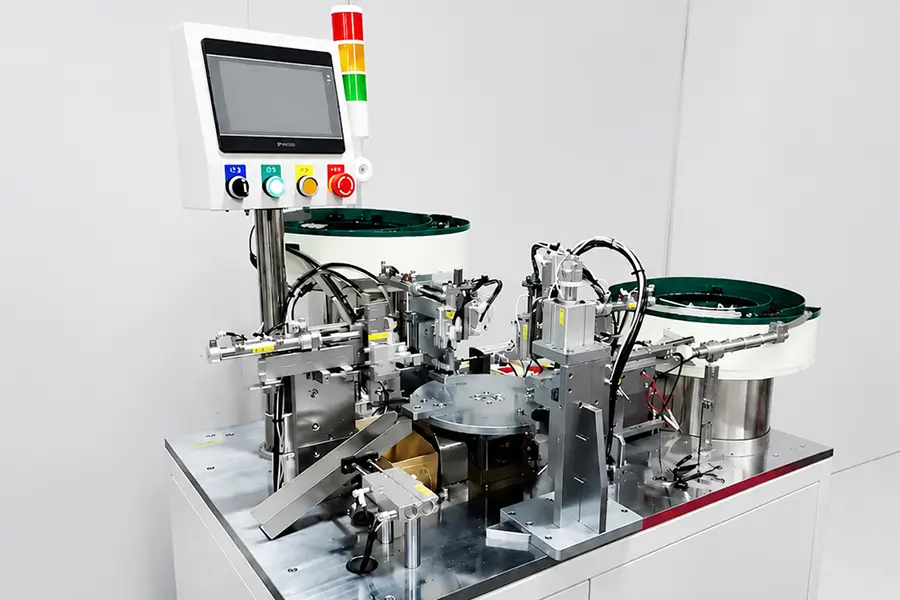
How Does Automatic Assembly Work Step by Step?
Automatic assembly usually follows a clear process.
1. Part Feeding
First, parts move into the machine through feeding systems like vibratory bowl feeders, flex feeders, or step feeders.
This ensures parts enter in the correct direction.
2. Part Positioning
Next, the system places parts into the right location. Precision fixtures hold the parts steady.
This step improves assembly accuracy.
3. Assembly Operation
Then, the machine performs the assembly task. It may use:
- Robotic arms
- Screwdrivers
- Press units
- Welding units
Each tool works based on the product design.
4. Inspection
Vision systems check if the assembly is correct. Cameras can detect missing or wrong parts.
This helps reduce defects.
5. Product Output
Finally, the finished products move to packaging or the next production stage.
The whole process is fast and stable.
What Components Make Up an Automatic Assembly System?
A complete assembly machine has several important parts.
Feeding System
This supplies parts automatically.
Popular options include:
- Vibratory bowl feeders
- Flexible feeders
- Centrifugal feeders
Robot System
Robots pick and place parts quickly.
Delta robots are often used for high-speed assembly.
Vision Inspection System
Cameras improve accuracy by checking part position and quality.
PLC Control System
The PLC controls the whole machine and keeps each step synchronized.
Conveyor System
Conveyors move products between stations.
At SWOER, we combine all these parts into one complete solution.
What Industries Use Automatic Assembly Machines?
Many industries in Malaysia use automatic assembly.
Electronics Industry
For connectors, switches, and small plastic parts.
Automotive Industry
For clips, fasteners, sensors, and wiring parts.
Medical Industry
For syringes, caps, and plastic medical devices.
Consumer Products
For bottle caps, packaging parts, and daily-use items.
As production demand grows, more companies need automation.
What Are the Benefits of Automatic Assembly?
Automatic assembly offers many advantages.
Higher Speed
Machines work much faster than manual labor.
Better Quality
Stable operation improves product consistency.
Lower Labor Cost
Companies can reduce manpower needs.
Higher Precision
Machines can repeat the same action accurately.
24/7 Production
Automatic systems can run continuously.
This increases total output.
For Malaysia factories facing labor shortages, this is a strong solution.
How to Choose the Right Assembly Machine?
Choosing the right machine depends on your product.
You should consider:
- Product size
- Assembly steps
- Production speed
- Precision requirements
- Future expansion
A custom solution often works better than a standard machine.
SWOER provides full custom assembly machine solutions for different industries.
We help customers improve efficiency and reduce production costs.
Conclusion
Automatic assembly improves production speed, quality, and efficiency. It helps manufacturers stay competitive in today’s market.
In Malaysia, more factories are investing in assembly automation to meet growing demand.
If you need a custom assembly machine, SWOER can provide complete automation solutions. From feeding systems to robotic assembly, we help you build smarter production lines.
FAQs
Automatic assembly is a process where machines put parts together without manual labor.
Electronics, automotive, medical, and packaging industries use them.
It depends on the product. Some machines can complete thousands of cycles per hour.
Yes. SWOER designs custom assembly machines based on your product and production needs.
It helps reduce labor costs, improve efficiency, and support industrial growth.
