
Introduction
In modern manufacturing, improving production efficiency and reducing manual labor have become important goals for many industries. Assembly machines provide an effective solution by automating the process of assembling different components with higher speed, accuracy, and consistency.
For manufacturers in Malaysia, especially in industries such as electronics, automotive, plastic parts, medical devices, and consumer products, assembly machines help companies increase productivity, reduce production costs, and maintain stable product quality. This article explains what assembly machines are, how they work, their benefits, and why they are becoming an important part of industrial automation.
What Are Assembly Machines?
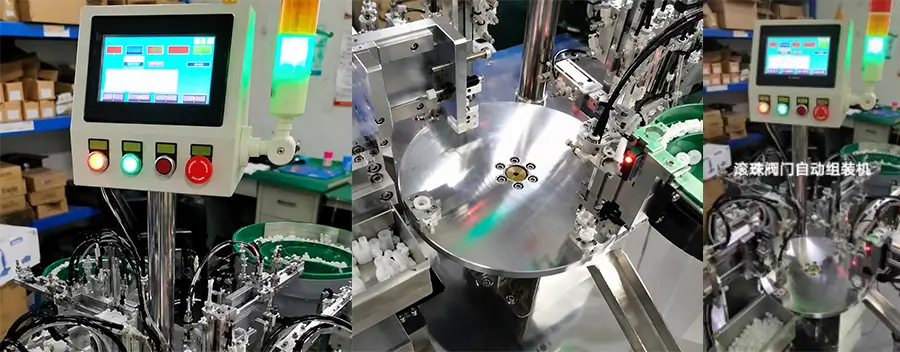
Assembly machines are automated systems designed to combine multiple components into a finished product or sub-assembly. These machines perform tasks such as feeding, positioning, inserting, fastening, pressing, testing, and inspecting parts during the production process.
Unlike traditional manual assembly, assembly machines use automated mechanisms such as vibratory bowl feeders, robotic systems, sensors, and control systems to complete repetitive tasks with high precision.
In Malaysia’s manufacturing sector, assembly machines are commonly used for producing products that require consistent quality and high-volume production, including electronic components, automotive parts, plastic components, and industrial products.
How Do Assembly Machines Work?
An assembly machine usually combines several automation technologies to complete the assembly process. The working process often includes:
1. Part Feeding
Components are supplied through feeding systems such as vibratory bowl feeders, centrifugal feeders, or flexible feeders. These systems organize parts and deliver them in the correct orientation.
2. Part Positioning and Handling
Automation systems accurately move components into the assembly position. Robots, pneumatic systems, and mechanical fixtures help ensure precise placement.
3. Assembly Operation
The machine performs specific assembly tasks such as pressing, inserting, screwing, welding, gluing, or fitting components together.
4. Inspection and Quality Control
Sensors and vision inspection systems check product accuracy and detect defects before the final product leaves the production line.
By integrating these processes, assembly machines create a complete automated production solution that improves efficiency and reliability.
What Are the Main Types of Assembly Machines?
Assembly machines can be customized based on product requirements and manufacturing processes. Common types include:
Automatic Assembly Machines
Automatic assembly machines handle the entire assembly process with minimal human involvement. They are suitable for high-volume production where speed and consistency are important.
Semi-Automatic Assembly Machines
Semi-automatic machines combine automation with operator assistance. They are often used for products requiring manual loading or flexible production changes.
Robotic Assembly Machines
Robotic assembly machines use industrial robots to perform precise assembly tasks. They are widely used in industries that require high accuracy and repeatability.
Customized Assembly Machines
Many Malaysian manufacturers require customized solutions because different products have unique shapes, sizes, and assembly processes. Custom assembly machines can integrate feeders, robots, inspection systems, and control software based on production needs.
What Industries Use Assembly Machines in Malaysia?
Assembly machines support many industries across Malaysia, including:
Electronics Manufacturing
Electronic products often contain small and precise components. Assembly machines help manufacturers achieve accurate component placement and improve production efficiency.
Automotive Industry
Automotive manufacturers use assembly machines for assembling parts such as connectors, sensors, switches, and mechanical components.
Plastic Parts Manufacturing
Plastic component manufacturers use automated assembly systems to improve production speed and reduce errors during repetitive assembly operations.
Medical Device Manufacturing
Medical products require strict quality control. Assembly machines help maintain accuracy and consistency while supporting clean and reliable production processes.
Consumer Products
Many household and consumer products use automated assembly solutions to increase output and reduce manufacturing costs.
What Are the Benefits of Using Assembly Machines?
Assembly machines provide several advantages for modern manufacturers:
Higher Production Efficiency
Automation allows machines to operate continuously with faster cycle times compared with manual assembly processes.
Improved Product Quality
Assembly machines maintain consistent positioning and operation, reducing human errors and improving product reliability.
Lower Labor Costs
By automating repetitive assembly tasks, companies can reduce dependence on manual labor and improve workforce efficiency.
Flexible Production
Modern assembly machines can be customized and adjusted for different products, making them suitable for changing production requirements.
Better Integration with Automation Systems
Assembly machines can work together with vibratory bowl feeders, vision inspection systems, and industrial robots to create complete automation lines.
How to Choose the Right Assembly Machine for Your Business?
Choosing the right assembly machine depends on several factors:
Product Requirements
Manufacturers need to consider product size, material, assembly method, and production volume.
Production Speed
High-volume production requires machines with faster cycle times and stable operation.
Automation Level
Companies should decide whether they need a fully automatic system or a semi-automatic solution.
Future Expansion
A flexible assembly machine design allows easier upgrades when production requirements increase.
For Malaysian manufacturers, working with an experienced automation supplier can help create a solution that matches specific production goals.
Conclusion
Assembly machines play an important role in modern manufacturing by improving production speed, accuracy, and efficiency. With the growth of automation in Malaysia, more companies are adopting assembly machines to reduce production challenges and improve competitiveness.
By combining technologies such as vibratory bowl feeders, robotic systems, and vision inspection, assembly machines provide reliable automation solutions for various industries. Whether for electronics, automotive, plastic parts, or medical products, customized assembly machines help manufacturers achieve higher productivity and better quality.
FAQs
An assembly machine is used to automatically combine different components into a finished product or sub-assembly. It performs tasks such as feeding, positioning, inserting, and inspection.
Yes. Assembly machines are commonly used for small components by integrating precision feeding systems such as vibratory bowl feeders and flexible feeders.
Yes. Assembly machines can be designed according to product size, assembly requirements, production speed, and industry needs.
Industries including electronics, automotive, plastic manufacturing, medical devices, and consumer products commonly use assembly machines.
Assembly machines automate repetitive processes with higher speed, accuracy, and consistency, while manual assembly relies on human operators.
